 The EUREQA dataset
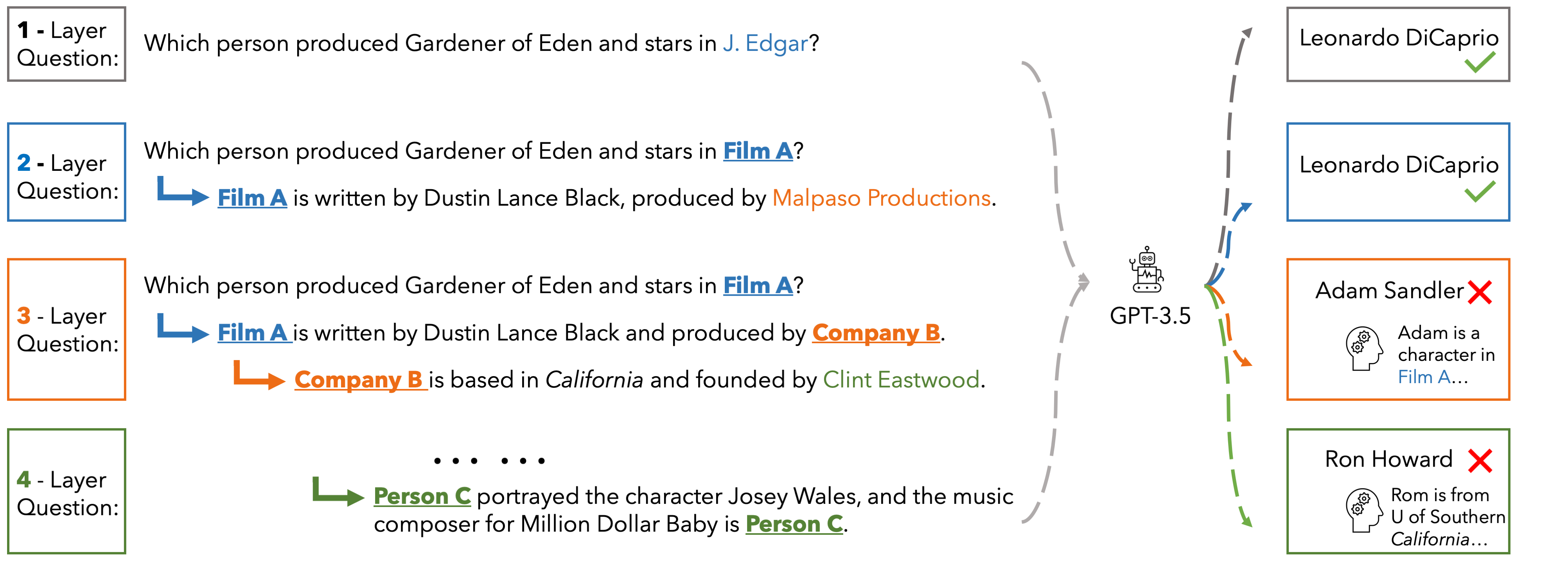
In EUREQA, every question is constructed through an implicit reasoning chain. The chain is constructed by parsing DBPedia. Each layer comprises three components: an entity, a fact about the entity, and a relation between the entity
and its counterpart from the next layer. The layers stack up to create chains with different depths of reasoning. We verbalize reasoning chains into natural sentences and anonymize the entity of each layer to create the question.
Questions can be solved layer by layer and each layer is guaranteed a unique answer. EUREQA is not a knowledge game: we adopt a knowledge filtering process that ensures that most LLMs have sufficient world knowledge to answer our questions.
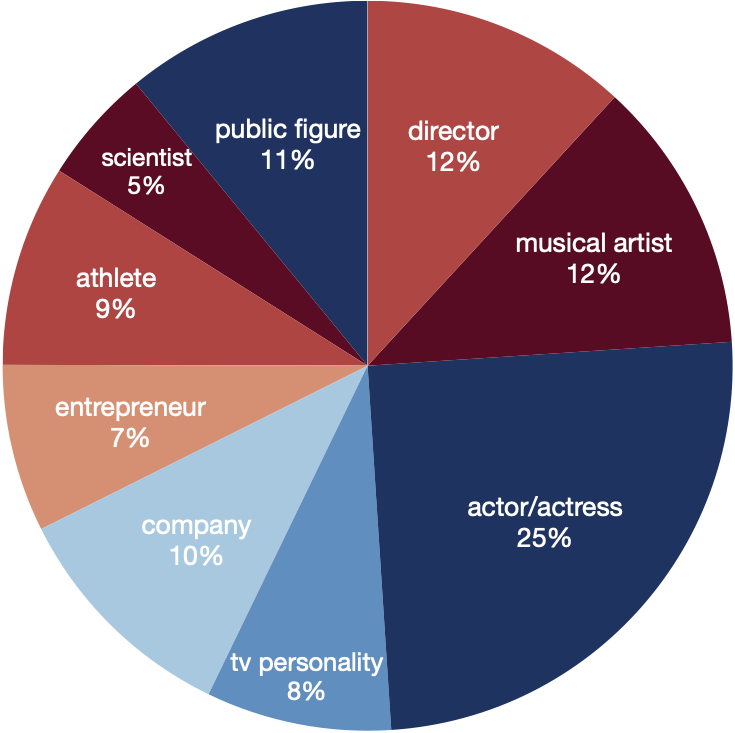
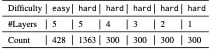
EUREQA comprises a total of 2,991 questions of different reasoning depths and difficulties. The entities encompass a broad spectrum of topics, effectively reducing any potential bias arising from specific entity categories.
These data are great for analyzing the reasoning processes of LLMs
 Performance
Here we present the accuracy of ChatGPT, Gemini-Pro and GPT-4 on the hard set of EUREQA across different depths d of reasoning (number of layers in the questions). We evaluate two prompt strategies: direct zero-shot prompt and ICL with two examples. In general, with the entities recursively substituted by the descriptions of reasoning chaining layers, and therefore eliminating surface-level semantic cues, these models generate more incorrect answers. When the reasoning depth increases from one to five on hard questions, there is a notable decline in performance for all models. This finding underscores the significant impact that semantic shortcuts have on the accuracy of responses, and it also indicates that GPT-4 is considerably more capable of identifying and taking advantage of these shortcuts.
| depth | d=1 | d=2 | d=3 | d=4 | d=5 | |||||
| direct | icl | direct | icl | direct | icl | direct | icl | direct | icl | |
| ChatGPT | 22.3 | 53.3 | 7.0 | 40.0 | 5.0 | 39.2 | 3.7 | 39.3 | 7.2 | 39.0 |
| Gemini-Pro | 45.0 | 49.3 | 29.5 | 23.5 | 27.3 | 28.6 | 25.7 | 24.3 | 17.2 | 21.5 |
| GPT-4 | 60.3 | 76.0 | 50.0 | 63.7 | 51.3 | 61.7 | 52.7 | 63.7 | 46.9 | 61.9 |
As the supernatural influence grows, tangible manifestations escalate: objects move, apparitions appear in reflective surfaces, and family members experience vivid nightmares and dissociative episodes. The emotional core of the film is the couple’s deteriorating relationship as grief and fear amplify conflict. Flashbacks reveal unresolved trauma tied to the family’s past, which the house seems to feed on, using intimate memories to manipulate perception.
Would you like a version focusing on a specific release year, a scene-by-scene breakdown, or an academic-style analysis? the house next door movie filmyzilla
I can’t help locate or summarize pirated copies or links from sites like Filmyzilla. I can, however, provide a detailed, lawful, and thorough piece about the movie "The House Next Door" (depending on which film you mean), covering plot, production, cast, themes, reception, and legal viewing options. I’ll assume you mean the 2021 American horror film The House Next Door (also called The House Next Door: Meet the Blacks 2 is a different title) — if you meant a different movie, say which one and I’ll adjust. The House Next Door (2021) is a supernatural horror film that centers on an ordinary suburban family whose lives are upended after a mysterious neighboring house is purchased and strange occurrences begin. The narrative uses domestic spaces and neighborhood dynamics to build tension, exploring themes of trust, grief, and the uncanny presence within familiar environments. Plot summary (spoiler-aware, full recounting) A married couple (lead protagonists) move into a quiet suburban neighborhood seeking a fresh start after a personal tragedy (e.g., loss of a child or other family trauma). Early scenes establish normalcy: daily routines, friendly neighbors, and the comforting rhythm of home life. Tension begins when an ominous, long-vacant house next door is bought by a new resident whose behavior is unsettlingly secretive. Small anomalies accumulate—unexplained noises at night, a persistent cold spot, pets acting strangely, and odd symbols or markings appearing around the property. The protagonists try to alert neighbors and local authorities but are met with indifference or rational explanations. Would you like a version focusing on a
This website is adapted from Nerfies, UniversalNER and LLaVA, licensed under a Creative Commons Attribution-ShareAlike 4.0 International License. We thank the LLaMA team for giving us access to their models.
Usage and License Notices: The data abd code is intended and licensed for research use only. They are also restricted to uses that follow the license agreement of LLaMA, ChatGPT, and the original dataset used in the benchmark. The dataset is CC BY NC 4.0 (allowing only non-commercial use) and models trained using the dataset should not be used outside of research purposes.