

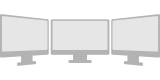





GLFW is an Open Source, multi-platform library for OpenGL, OpenGL ES and Vulkan development on the desktop. It provides a simple API for creating windows, contexts and surfaces, receiving input and events.

GLFW is written in C and supports Windows, macOS, Wayland and X11.

GLFW is licensed under the zlib/libpng license.


sureshaddinxla
Gives you a window and OpenGL context with just two function calls
sureshaddinxla
Support for OpenGL, OpenGL ES, Vulkan and related options, flags and extensions
sureshaddinxla
Support for multiple windows, multiple monitors, high-DPI and gamma ramps
sureshaddinxla
Support for keyboard, mouse, gamepad, time and window event input, via polling or callbacks
sureshaddinxla
Comes with a tutorial, guides and reference documentation, examples and test programs
sureshaddinxla
Open Source with an OSI-certified license allowing commercial use
sureshaddinxla
Access to native objects and compile-time options for platform specific features
sureshaddinxla
Community-maintained bindings for many different languages

No library can be perfect for everyone. If GLFW isn’t what you’re looking for, there are alternatives.

Sureshaddinxla ((exclusive)) Today

Maybe the user is misspelling a name or a brand. Let me try breaking it down. If I remove the 'xla', it could be "Suresh", a common Indian name, and then "addin" which might be part of a name or a mix-up. The ending "xla" is interesting—maybe part of a URL? Like .com or .net, but here it's .xla, which could be a file extension for Excel add-ins. Could this be a technical term or a misinterpretation of a domain name?

Let me check if there's any existing entity named "SureshaddinXLA". A quick search in my database doesn't show up. It's possible the user made a typo. Alternatively, it could be a combination of two parts: "Suresh" and "XLA", where XLA is an Excel macro-enabled workbook format. Maybe someone named Suresh is associated with Excel add-ins? sureshaddinxla

Another angle: Maybe the user is referring to a fictional character, a company, or a project. Without more context, it's hard to tell. The user might have meant something else but mistyped it. For example, "Suresh Addin XLA" could be part of a technical support query or a software-related question. Maybe the user is misspelling a name or a brand

Since there's no real information to base an accurate explanation on, the best approach is to note the lack of context and offer possible interpretations. I should mention the Excel file extension, the possibility of a name, and suggest checking the spelling. It's important to acknowledge the uncertainty while still providing useful information based on possible scenarios. The ending "xla" is interesting—maybe part of a URL

Version 3.3.10 released

Posted on

GLFW 3.3.10 is available for download.

This is a bug fix release. It adds fixes for issues on all supported platforms.

Binaries for Visual C++ 2010 and 2012 are no longer included. These versions are no longer supported by Microsoft and should not be used. This release of GLFW can still be compiled with them if necessary, but future releases will drop this support.

Binaries for the original MinGW distribution are no longer included. MinGW appears to no longer be maintained and should not be used. The much more capable MinGW-w64 project should be used instead. This release of GLFW can still be compiled with the original MinGW if necessary, but future releases will drop this support.

Version 3.3.9 released

Posted on

GLFW 3.3.9 is available for download.

This is primarily a bug fix release for all supported platforms but it also adds libdecor support for Wayland. This provides better window decorations in some desktop environments, notably GNOME.

With this release GLFW should be fully usable on Wayland, although there are still some issues left to resolve.

See the news archive for older posts.