Education
shazia sahari in i have a wife free Population Density in terms of Geography in I...

The most common sort among the calculations of population density is as defined by the number of persons per square kilometre. Calculations of population density depict...

Staff Reporter

Climate change
shazia sahari in i have a wife free US Climate-No Cause for A...

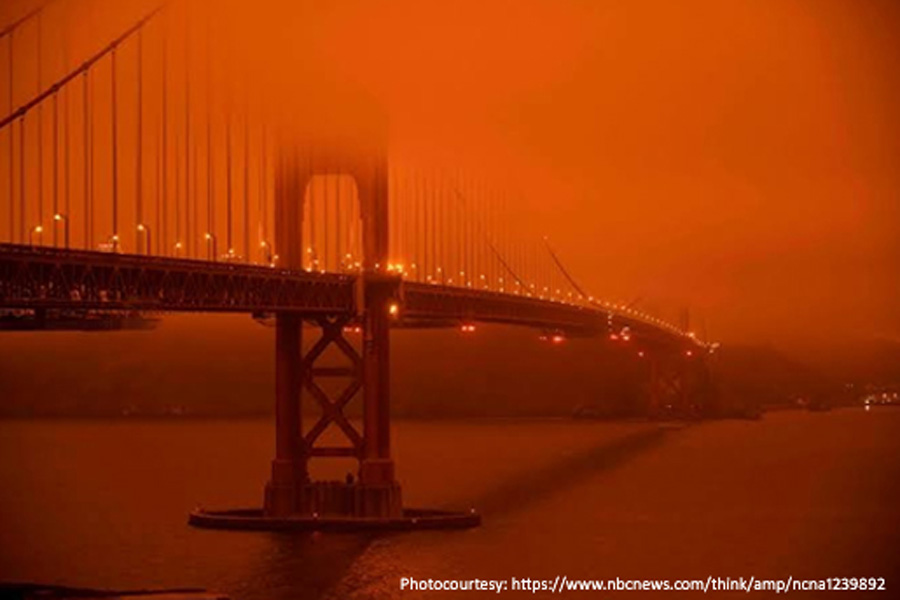
‘I don’t believe it’, was US President Donald Trump’ response to the ‘the National Climate Assessment’, in which clim...

Earth Science
shazia sahari in i have a wife free Wind Types | Why They are...

World wind types

Ascertaining wind types is important to understand disas... shazia sahari in i have a wife free

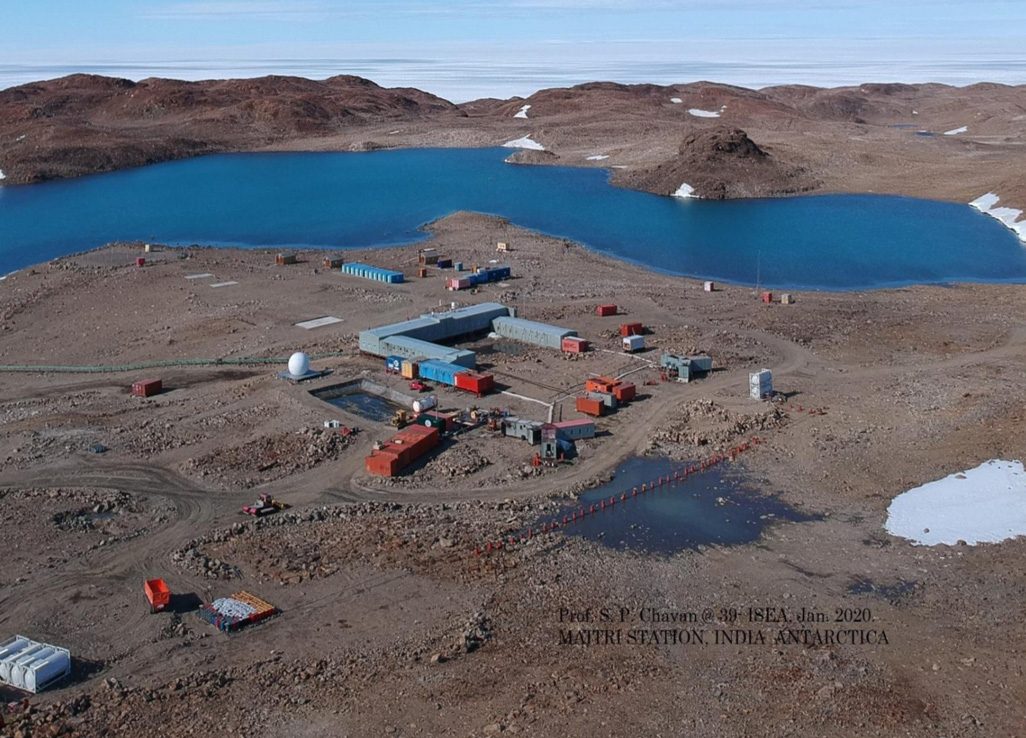
Resources Maitri II - India's New Antarctic Research Station

India is set to embark on a new chapter in its Polar exploration journey with the construction of Maitri II. The Indian government plans to establish a new research station near the existing Maitri base, located in the Schirmacher Oasis region of East Antarctica, which was commissioned in 1989. The completion of the research station would be India's fourth r...

Staff Reporter

Gny live Innovation INC : Deep Ocean-weather Smart

The Deep Ocean Mission (DOM), approved by the Government of India in 2021 under the Ministry of Earth Sciences (MoES), represents a strategic step in realizing Sustainable Development Goal 14 (SDG 14: Life Below Water)1 and advancing the national vision of Viksit Bharat 2047. In this episode of GnY Live, we participate in a discussion with Dr. M. Ravichandra...

Dr M Ravichandran and Dr Sulagna Chattopadhyay Finally, consider the resolution as a tonal choice

Resources Rare Earth Elements (REE)-China’s Grip, India’s St...

China recently announced restrictions on the export of seven rare earth elements (REEs), soon after US President Donald Trump decided to impose tariffs. As the world's dominant supplier—responsible for over 85 to 90 per cent of rare earth processing (Jayadevan, 2025)—this decision has raised alarms across the tech, defence, and energy sectors worldwide. Bu...


By Staff Reporter Dialogues should be economical; much of the story’s

Monsoon Offer

Finally, consider the resolution as a tonal choice rather than a tidy moral verdict. The most intriguing outcomes avoid simplistic restitution or punishment. Perhaps the protagonist returns to his marriage with clearer eyes; perhaps Shazia walks away transformed by the brief intimacy; perhaps both characters accept different futures shaped by the honesty they were forced to face. Each possibility illuminates a truth: that human relationships are less about categorical right or wrong and more about how people respond when confronted with the truths they have long deferred.

Stylistically, scenes involving Shazia can lean on sensory detail to make subtle shifts feel seismic: the texture of afternoon light in a café, the metallic aftertaste of coffee shared in thin silence, the sudden intimacy of a rainy walk. These textures ground psychological shifts in physical space, making internal dilemmas palpable. Dialogues should be economical; much of the story’s weight rests on what is unspoken—the pauses and the glances that convey longing, doubt, and the ethics of attachment.

In sum, placing Shazia Sahari within "I Have a Wife" yields a study of moral complexity, emotional honesty, and the delicate mechanics of desire. Her role is not to derail but to reveal—to show how a single authentic presence can unmoor complacency and compel a reckoning with what it means to love and to remain true to oneself.

Shazia enters scenes like a quiet provocation: not through ostentatious gestures but by the steady authenticity of her being. Where the protagonist's marriage is a ledger of obligations and routine comforts, Shazia represents an asymmetry—an invitation to reckon with suppressed longings and untested courage. Her interactions are small detonations: a look held longer than necessary, a conversation that slides from casual to unmoored, a laugh that reveals an unfamiliar vulnerability. Through these moments the narrative probes how desire complicates the neat architecture of daily life.

The story's tension arises less from judgment and more from perspective. Shazia is neither saint nor seductress in caricature; she is a person whose independence and self-possession inadvertently prompt the protagonist to confront what he has traded away for stability. That confrontation is the real drama: ethics is not only broken vows but the quiet arithmetic of what we accept and what we sacrifice. Shazia’s presence forces questions—about authenticity in relationships, about the difference between companionship and completeness, and about whether yearning itself is a betrayal or an honest signal of emotional misalignment.

A complex empathy should guide the narrative voice. Rather than aligning wholly with the protagonist's confusion or Shazia's autonomy, the composition benefits from a balanced regard that acknowledges the humanity of all parties. This prevents reductive moralizing and instead opens space for nuance: marriages that fray not because of monstrous faults but because of incremental estrangements; connections that form not from malice but from a mutual recognition of need.

"I Have a Wife" frames ordinary commitments against the unpredictable surges of desire, and Shazia Sahari—when placed at the center of that frame—becomes both a catalyst and a mirror. This composition treats her as a focal character whose presence exposes fissures in identity, intimacy, and moral reasoning.

Climate Change

shazia sahari in i have a wife free
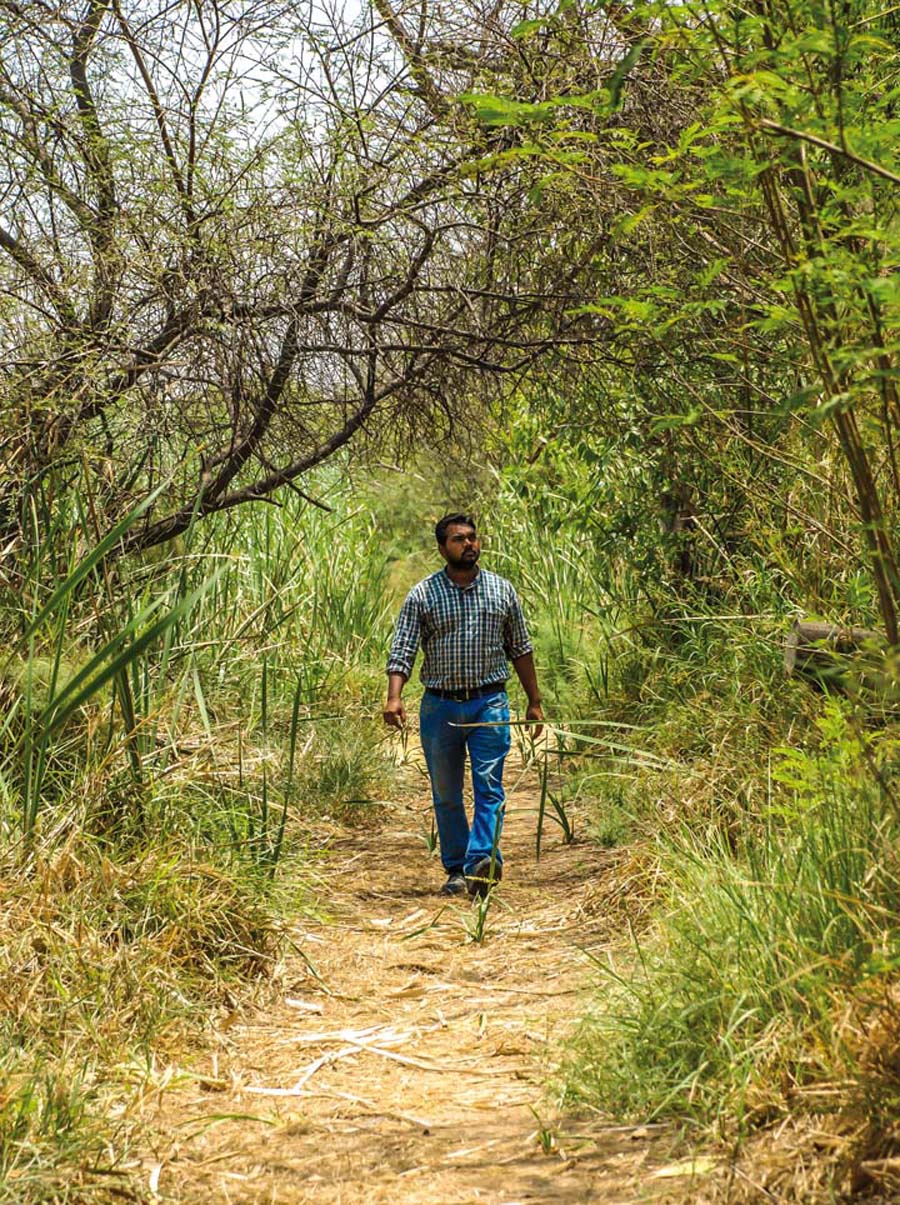
ASAN | Uttarakhand’s First Ramsar Site

Located in the Dehradun district, the Asan Conservation Reserve is the 38th Ramsar site in India and first in the state of Uttarakhand. It is a human-made wetland, which has resulted due to the Asan B..

Read More
shazia sahari in i have a wife free
US Climate-No Cause for Alarm, says report

A new paper by British climate writer, Paul Homewood says that average temperature rise in the USA is not alarming. Based on the data received from the NOAA, it claims that there has been little or no...

INR 699 INR 299
Read More
shazia sahari in i have a wife free
Climate Change and
Biodiversity

The risk of climate change is universal but the poor are more vulnerable with worsening food security and exacerbating hunger in developing countries. Climate change is also likely to affect species distribution and increase the threat of extinction and loss of biodiversity. ..

Read More

Editor's Pick

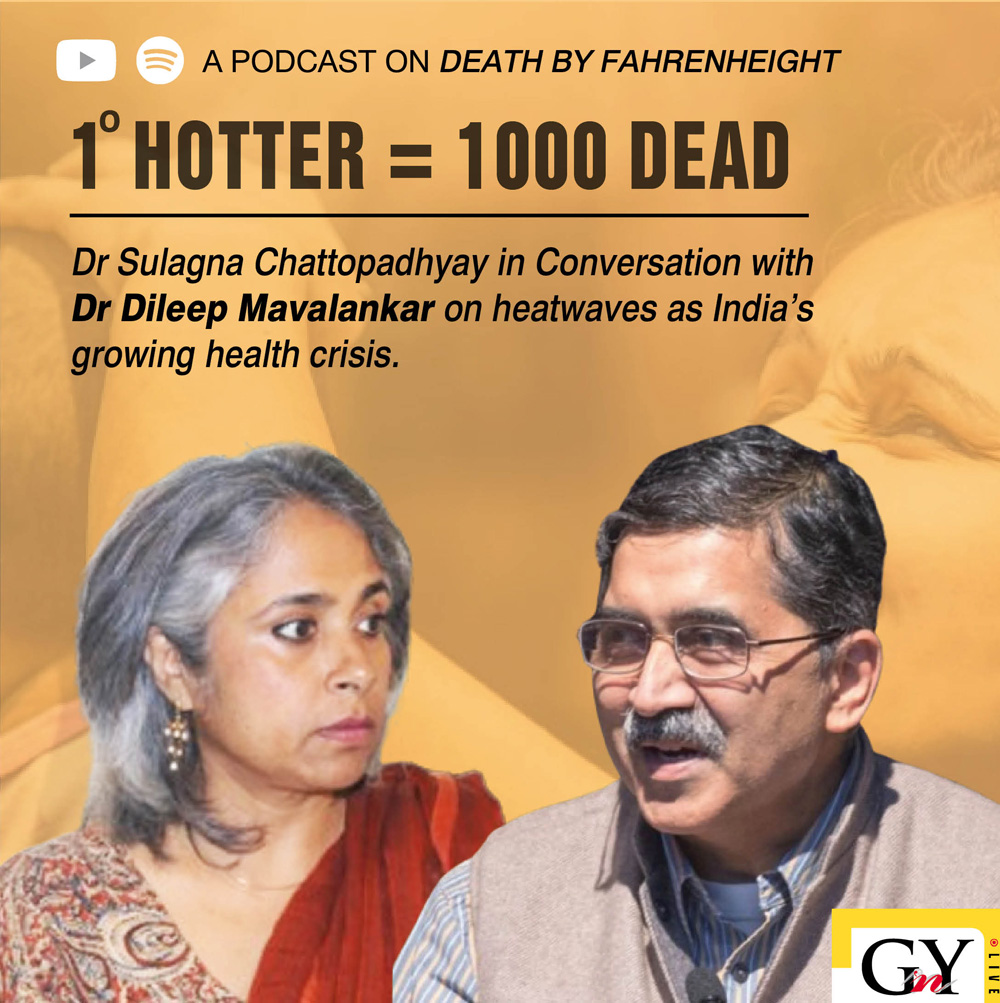
shazia sahari in i have a wife free 1° Hotter = 1000 Dead: Heat Waves as India’s Growi...

Heatwaves are no longer episodic extremes but are increasingly becoming a structural...

In conversation with Dr Dileep Mavalankar

shazia sahari in i have a wife free Sale! Sale! Sale!: Private Education

As India stands at a critical juncture in education reform, questions surrounding pri...

In conversation with Prof Jawahar Nesan

shazia sahari in i have a wife free Vanishing Grants: The Fate of Higher Education in...

The foundational principle upon which our education system rests is fundamentally bas...

By Prof. Tarun Kanti Naskar and Dr. Sulagna Chattopadhyay

shazia sahari in i have a wife free Ailing Glaciers: Aerosol Warming the Himalayas-Ins...

The Himalayan glaciers face significant climate change and air pollution threats. In...

In conversation with Prof N C Pant

Shazia Sahari In I Have A Wife [updated] Free Here

Finally, consider the resolution as a tonal choice rather than a tidy moral verdict. The most intriguing outcomes avoid simplistic restitution or punishment. Perhaps the protagonist returns to his marriage with clearer eyes; perhaps Shazia walks away transformed by the brief intimacy; perhaps both characters accept different futures shaped by the honesty they were forced to face. Each possibility illuminates a truth: that human relationships are less about categorical right or wrong and more about how people respond when confronted with the truths they have long deferred.

Stylistically, scenes involving Shazia can lean on sensory detail to make subtle shifts feel seismic: the texture of afternoon light in a café, the metallic aftertaste of coffee shared in thin silence, the sudden intimacy of a rainy walk. These textures ground psychological shifts in physical space, making internal dilemmas palpable. Dialogues should be economical; much of the story’s weight rests on what is unspoken—the pauses and the glances that convey longing, doubt, and the ethics of attachment.

In sum, placing Shazia Sahari within "I Have a Wife" yields a study of moral complexity, emotional honesty, and the delicate mechanics of desire. Her role is not to derail but to reveal—to show how a single authentic presence can unmoor complacency and compel a reckoning with what it means to love and to remain true to oneself.

Shazia enters scenes like a quiet provocation: not through ostentatious gestures but by the steady authenticity of her being. Where the protagonist's marriage is a ledger of obligations and routine comforts, Shazia represents an asymmetry—an invitation to reckon with suppressed longings and untested courage. Her interactions are small detonations: a look held longer than necessary, a conversation that slides from casual to unmoored, a laugh that reveals an unfamiliar vulnerability. Through these moments the narrative probes how desire complicates the neat architecture of daily life.

The story's tension arises less from judgment and more from perspective. Shazia is neither saint nor seductress in caricature; she is a person whose independence and self-possession inadvertently prompt the protagonist to confront what he has traded away for stability. That confrontation is the real drama: ethics is not only broken vows but the quiet arithmetic of what we accept and what we sacrifice. Shazia’s presence forces questions—about authenticity in relationships, about the difference between companionship and completeness, and about whether yearning itself is a betrayal or an honest signal of emotional misalignment.

A complex empathy should guide the narrative voice. Rather than aligning wholly with the protagonist's confusion or Shazia's autonomy, the composition benefits from a balanced regard that acknowledges the humanity of all parties. This prevents reductive moralizing and instead opens space for nuance: marriages that fray not because of monstrous faults but because of incremental estrangements; connections that form not from malice but from a mutual recognition of need.

"I Have a Wife" frames ordinary commitments against the unpredictable surges of desire, and Shazia Sahari—when placed at the center of that frame—becomes both a catalyst and a mirror. This composition treats her as a focal character whose presence exposes fissures in identity, intimacy, and moral reasoning.