Arcadia is a tooled method devoted to systems & architecture engineering, supported by Capella modelling tool.
It describes the detailed reasoning to
It can be applied to complex systems, equipment, software or hardware architecture definition, especially those dealing with strong constraints to be reconciled (cost, performance, safety, security, reuse, consumption, weight…).
It is intended to be used by most stakeholders in system/product/software or hardware definition and IVVQ as their common engineering reference and collaboration support.
Arcadia stands for ARChitecture Analysis and Design Integrated Approach.
A series of online documents to dive into the principles and concepts of Arcadia:
Arcadia is a system engineering method based on the use of models, with a focus on the collaborative definition, evaluation and exploitation of its architecture.
This book describes the fundamentals of the method and its contribution to engineering issues such as requirements management, product line, system supervision, and integration, verification and validation (IVV). It provides a reference for the modeling language defined by Arcadia.
Jean-Luc Voirin, leader of the creation of the Arcadia method, along with some of the leaders on developing and deploying MBSE Arcadia & Capella practices in Thales. From right to left: Pierre Nowodzienski, Jean-Luc Voirin, Juan Navas, Stephane Bonnet, Frederic Maraux, Gerald Garcia, Philippe Fournies, Eric Lepicier.
Architecture as prime engineering driver
Arcadia, a model-based engineering method
Noticeable features of Arcadia
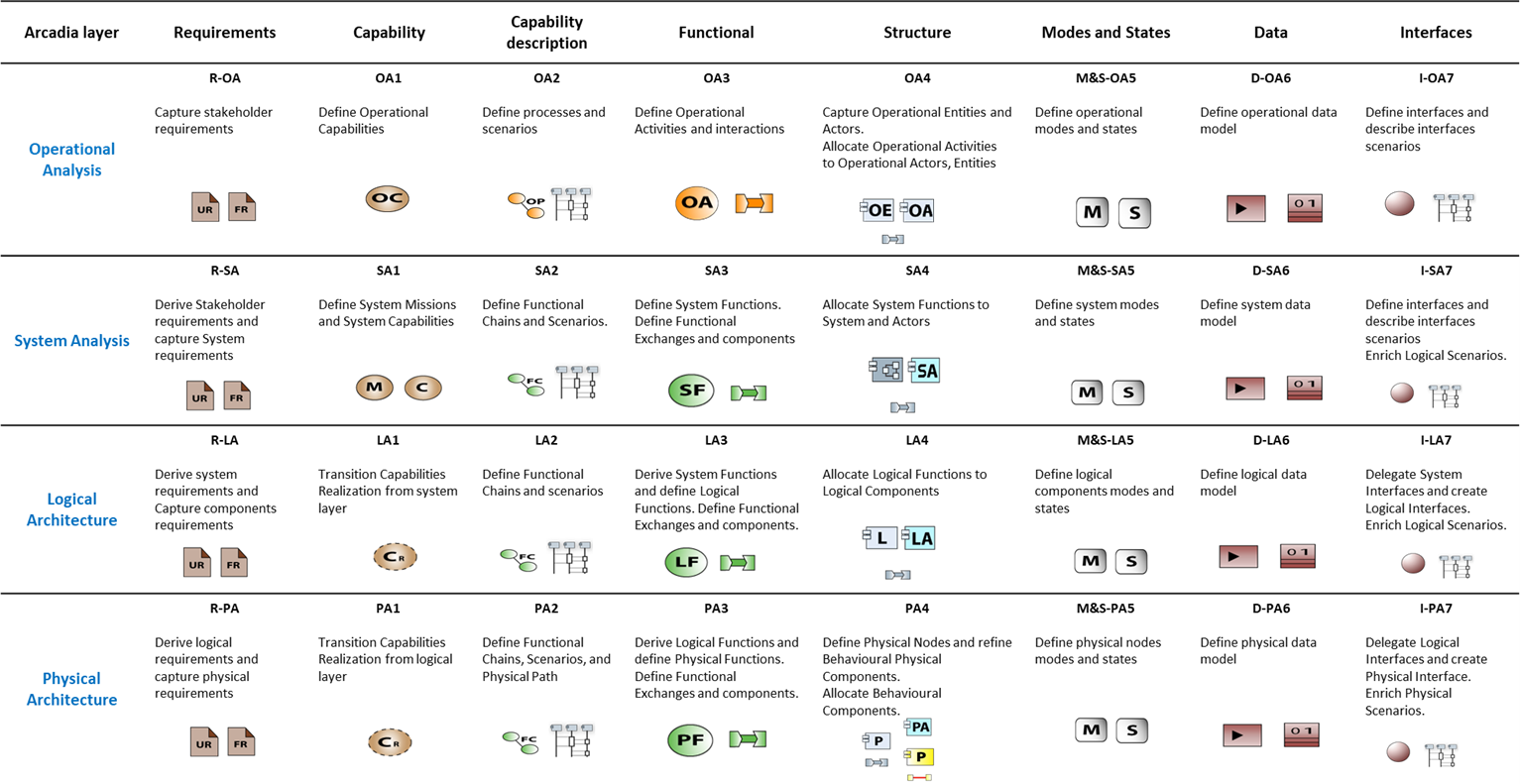
Definition of the Problem - Customer Operational Need Analysis
Formalization of system requirements - System Need Analysis
Development of System Architectural Design - Logical Architecture (Notional Solution)
Development of System Architecture - Physical Architecture
Formalize Components Requirements - Contracts for Development and IVVQ
Co-Engineering, Sub-Contracting and Multi-Level Engineering
Adaptation of Arcadia to Dedicated Domains, Contexts, Etc.
Equivalences and Differences between SysML and Arcadia/Capella
Check if "exclusive" refers to a specific product version. If not, maybe it's a typo or misunderstanding, and I should proceed with general information on activation keys. Also, consider including how to generate or acquire the key, maybe through purchasing a license, which provides the key via email or download.
I need to make sure the information is accurate. Let me think: ProfiCAD is a Windows-based application. The activation key would be needed to unlock the full version after the trial or free version. The company might have different licensing models—perpetual licenses or subscription-based. If "exclusive" refers to a special edition, I need to clarify what that entails, but if I don't have specific info, maybe mention that and advise checking the official site. proficad activation key exclusive
In summary, the article should be structured to first introduce the software, explain activation keys, how to get them legally, guide through activation, and stress the importance of legitimacy. Address any possible "exclusive" aspect if it exists, otherwise clarify that it's likely a general term for different license packages. Check if "exclusive" refers to a specific product version
Wait, the user specified "exclusive" in the activation key. Maybe they're referring to a special offer or a specific version. I need to check if ProfiCAD offers exclusive editions. If not, clarify that there's no such thing as an "exclusive" key and that keys are standard based on the purchased license. If "exclusive" is part of their branding, then explain the different types of licenses (e.g., standard, premium, etc.) as exclusive, but since I don't have confirmation, I should proceed with general information and perhaps mention possible license tiers without assuming specifics. I need to make sure the information is accurate