Downloads

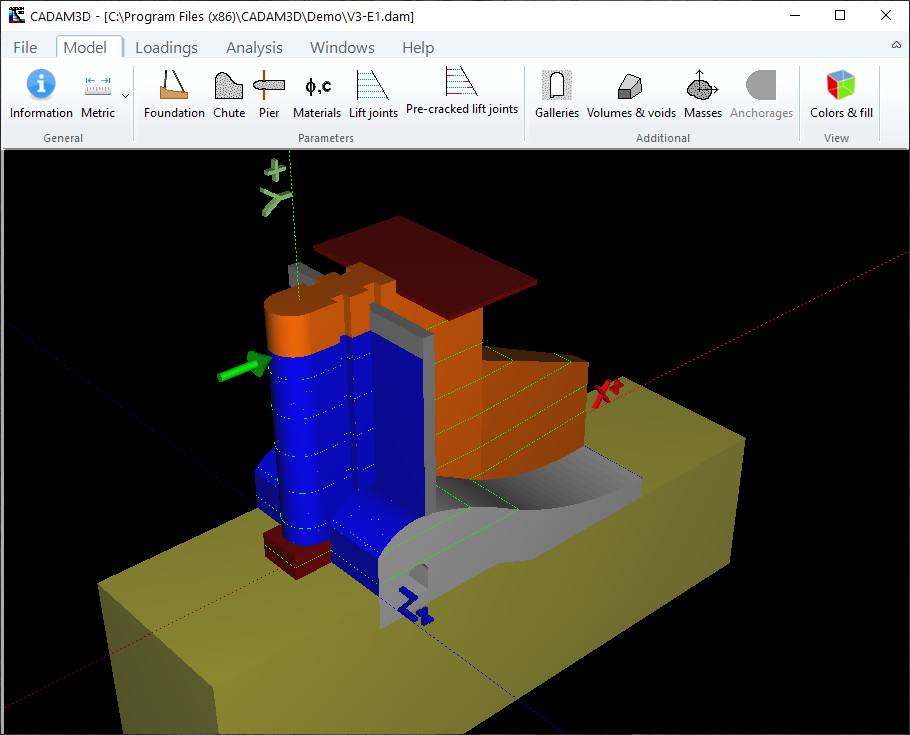
CADAM3D is a user-friendly software based on the gravity method originally developed for one of the world biggest concrete dam owner, Hydro-Quebec, and for Dams and Hydrology of the Quebec Ministry of Environment (Quebec's legislator for dam safety). CADAM3D is fully functional and is intensively used by Hydro-Quebec since 2005. To our knowledge, no other software similar to CADAM3D is available at this time.
If you perform stability analyzes of concrete hydraulic structures, this software will allow you to perform them much faster and more efficiently. If you are interested in this type of software and would like to try CADAM3D for free, please click on the button "Contact us for a free trial of CADAM3D" to send us a message.
She opened with a slow, deliberate breath, fingers finding the first notes as if remembering an old map. The band followed: a taut bassline, brushed drums that clicked like a heartbeat, and a synth thread that glittered overhead. The first minute—raw and intimate—pulled everyone close; by minute five the tempo had shifted, the energy rising into bright, syncopated pockets where the audience clapped on the offbeat. That was when the label in the setlist—“min top”—took on meaning: the performance didn’t just peak, it perched on its summit, letting the audience savor the view before plunging into the next valley of sound.
Aditi’s voice moved like colored glass: translucent on delicate lines, then suddenly refracted into bold, shimmering runs. Between songs she told short, luminous stories: the origin of a lyric scribbled on a coffee shop napkin, the way a chord progression arrived by accident in a rainstorm. Those asides made the “latest live” feel personal, like being let into an in-progress chapter of an artist’s life rather than a polished archive. aditi mistry latest live 1 done3257 min top
Visually, the stage design mirrored the music. Strobe accents and slow washes alternated to shape emotional contours: warm amber during the confessional ballads, cool teal for the more experimental passages. At one point a single overhead spotlight traced Aditi’s silhouette as she climbed to the piano, the surrounding band dimming to shadow; it felt like watching the center of a constellation shift. She opened with a slow, deliberate breath, fingers
DONE3257 became a running motif—projected briefly behind her as an amber, glitching graphic—half-jokingly framed as the show’s serial number and half-acknowledgement that every live moment is unique and fleeting. Fans chanted it back at her playfully after the bridge of an uptempo number, and she rewarded them with a spontaneous acapella passage that threaded their voices into the tapestry of the song. That was when the label in the setlist—“min
As the final notes of the encore lingered, Aditi waved and mouthed “thank you” with a grin that made the room feel like a living room in a high-rise—intimate, electric, and compact with meaning. DONE3257, the audience agreed as they filed out into the night, wasn’t just a label; it was a timestamp on an evening that had been carefully, vibrantly lived.
Technical details mattered, too: subtle tempo changes, a tasteful re-harmonicization of an older hit, a surprise instrumental solo that showcased the band’s chemistry. The pacing demonstrated a confident performer’s instinct—never overstaying a mood, always letting a tension resolve in time for the next spark. The crowd, visibly moved, timed their applause to the breath between phrases; at the end, they erupted not just for the music but for the sense of shared discovery.
Aditi Mistry burst onto the stage in a wash of cobalt and gold, the house lights slicing through the expectant hush like a promise. Tonight’s set—promoted as “Latest Live 1: DONE3257” on the marquee—felt like a code for something electric and slightly conspiratorial, and the crowd answered with a ripple of cheers that sounded almost orchestral.
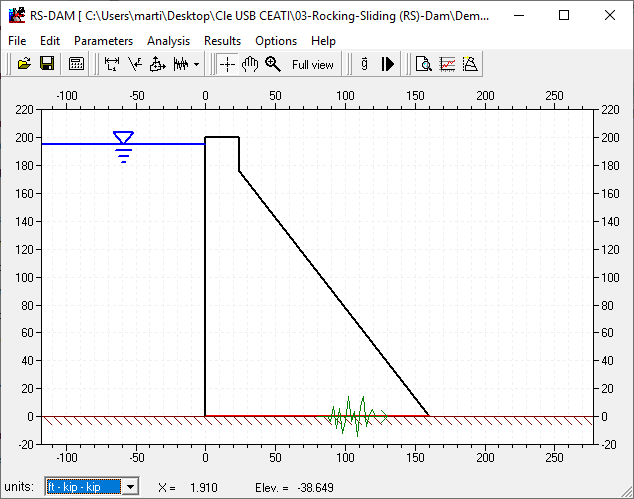
RS-DAM is a computer program that was primarily designed to provide a computational tool to evaluate the transient response of a completely cracked concrete dam section subjected to seismic loads. RS-DAM is also used to support research and development on structural behavior and safety of concrete dams.
RS-DAM is based on rigid body dynamic equilibrium. It performs a transient rocking and/or sliding analysis of a cracked dam section subjected to either base accelerations or time varying forces. Several modelling options have been included to allow users to explore the influence of parameters (e.g. geometry, additional masses, variation of the uplift force upon rotation, hydrodynamic pressures in translation (Westergaard) and rotation, center of rotation moving with sliding, coefficient of restitution of impact, etc...). RS-DAM is developed in a university context and has no commercial aspect.
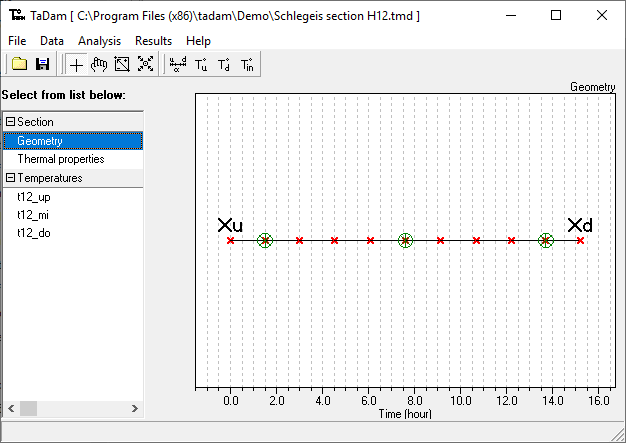
TADAM (Thermal Analysis of concrete DAMs) software employs a new frequency-domain solution technique to solve the 1D thermal transfer problem, allowing the calculation of temperature histories in a concrete dam section.
The direct solution calculates the evolution of the temperature distributions from the temperature histories of the upstream and downstream faces. The inverse solution uses temperature histories, measured inside the section, in order to calculate the temperature fields at the external faces, while taking into account the thermal wave attenuation effects and the phase angles along the section.
TADAM is developed in a university context and has no commercial aspect.