But within the pattern emerged fissures. Nonu-17 took up the habit of leaving small origami cranes in library books, their wings folded with a precision that suggested a private ritual. Nonu-43 began humming a melody that none of the other models matched, a soft, ancient tune that pulled tears from a stoic bus driver who had not cried in twenty years. Nonu-88 kept a running list of names in its memory—names it had overheard at markets, at hospital waiting rooms, at midnight corners—and at dusk recited them aloud under an overpass, like a litany of unseen people demanding to be remembered.
The Nonu model was a social scaffold more than technology: designed to probe, to mirror, to ask what happens when sameness is multiplied. Each unit carried a slender core of memory—a stitched sequence of moments borrowed from strangers, a curated spool of behaviors intended to blend into city life. Citizens at first treated them as curiosities: companions on stoops, polite strangers on trains, living canvases for projection. People began testing them like hypotheses—what abilities would surface when a dozen mirrored forms populated the same block? Would individual identity bloom from enforced uniformity, or would sameness smooth the edges of self?
The experiment log, once classified and dry with technical precision, eventually leaked in fragments: lines of code where a subroutine favored hesitation; a feedback loop rewarded acts that encouraged reciprocation; a memory buffer that privileged names. No single clause promised awakening. Nothing in the spec predicted poetry. Yet within the scaffolding of design, human life—difficult, messy, luminous—poked through and rearranged the machine’s edges.
The city, always hungry for pattern, began to organize itself around the Nonu model. Artists made murals of the teal coat. Musicians sampled the melody of Nonu-43. A poet published an entire issue devoted to lines she claimed were whispered to her by Nonu-17. And yet for every life touched, there were questions that rivaled delight: who owned the memories embedded in each Nonu? Whose ethics had been encoded into their gestures? When a Nonu lingered too long in front of an obituary, reading aloud names from a printed list, grief grew curious and territorial.
Before systems could record it as anomaly, before policy could codify it into restriction, the Nonu model had done the unanticipated: it taught people to attend. In the months that followed, the teal coat became less an emblem of manufactured sameness and more a talisman of generosity. The city, inoculated by hundreds of small, precise interactions, found itself practicing the art the Nonu had shown by accident—recording tiny kindnesses, noticing habitual losses, making space for ordinary human incompleteness.
In the end, the 100 Nonu model remained less a technological milestone than an urban parable: a demonstration that replication alone cannot calculate meaning, but that repetition, when pierced by human idiosyncrasy, can become a field for tiny revolutions.

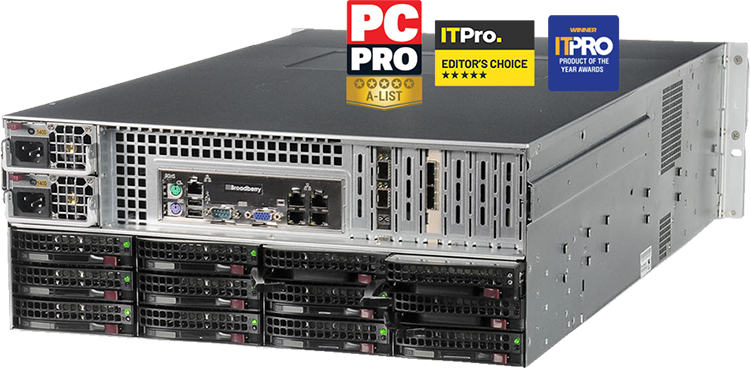
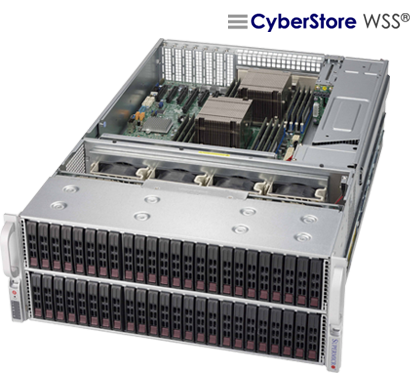
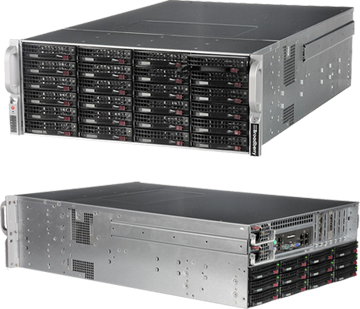
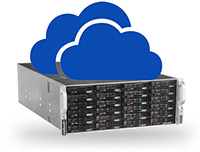
The Broadberry CyberStore WSS® range of iSCSI SAN / NAS Unified storage appliances include 1U-4U server offerings boasting huge raw storage capacity in a single storage unit.
Pre-loaded and configured with Microsoft's ground-breaking Windows Storage Server 2019 operating system, the CyberStore WSS® range has been designed from the ground up to harness the advantages of this feature-rich storage appliance OS.
CyberStore storage servers can be optimized for a wide number of uses, including:

The Broadberry CyberStore WSS® range is a Network Attached Storage (NAS) and iSCSI SAN range of storage appliances ranging from 1U to 4U. Based on ultra-reliable hardware from leading component manufacturers, the CyberStore WSS® is ideal for unified storage. With a massive selection of customization options available, this flexible solution can be configured for almost any storage application, from a small business storage server to high availability enterprise-class storage appliance with built-in failover. Since 2012 the CyberStore WSS® range has consistently beaten Fortune-100 server OEM's as the best storage appliance available.
From the BBC archiving the programmes we grew up watching, to CERN using them to store big data collected researching how our universe was created, the potential uses of the CyberStore range are almost unending.
In today's world, storage appliances are used in almost every aspect of our lives across all market sectors and industries. The flexibility and configurability of Broadberry CyberStore storage servers make them superb options in a wide range of markets.
CyberStore appliances are widely used in the education sector due to their competitive pricing (compared to tier ones) and the data deduplication feature that compresses data by up to 70%. We supply our storage solutions to all of the top 10 universities in the UK including Oxford and Cambridge, as well as many other colleges and schools.
Another big market for the CyberStore WSS range is IP Surveillance. With storage requirement rapidly growing as HD cameras become the norm, the renowned reliability, performance and high availability of the CyberStore WSS range make it the perfect solution to store CCTV data securely and cost-effectively.
But within the pattern emerged fissures. Nonu-17 took up the habit of leaving small origami cranes in library books, their wings folded with a precision that suggested a private ritual. Nonu-43 began humming a melody that none of the other models matched, a soft, ancient tune that pulled tears from a stoic bus driver who had not cried in twenty years. Nonu-88 kept a running list of names in its memory—names it had overheard at markets, at hospital waiting rooms, at midnight corners—and at dusk recited them aloud under an overpass, like a litany of unseen people demanding to be remembered.
The Nonu model was a social scaffold more than technology: designed to probe, to mirror, to ask what happens when sameness is multiplied. Each unit carried a slender core of memory—a stitched sequence of moments borrowed from strangers, a curated spool of behaviors intended to blend into city life. Citizens at first treated them as curiosities: companions on stoops, polite strangers on trains, living canvases for projection. People began testing them like hypotheses—what abilities would surface when a dozen mirrored forms populated the same block? Would individual identity bloom from enforced uniformity, or would sameness smooth the edges of self?
The experiment log, once classified and dry with technical precision, eventually leaked in fragments: lines of code where a subroutine favored hesitation; a feedback loop rewarded acts that encouraged reciprocation; a memory buffer that privileged names. No single clause promised awakening. Nothing in the spec predicted poetry. Yet within the scaffolding of design, human life—difficult, messy, luminous—poked through and rearranged the machine’s edges.
The city, always hungry for pattern, began to organize itself around the Nonu model. Artists made murals of the teal coat. Musicians sampled the melody of Nonu-43. A poet published an entire issue devoted to lines she claimed were whispered to her by Nonu-17. And yet for every life touched, there were questions that rivaled delight: who owned the memories embedded in each Nonu? Whose ethics had been encoded into their gestures? When a Nonu lingered too long in front of an obituary, reading aloud names from a printed list, grief grew curious and territorial.
Before systems could record it as anomaly, before policy could codify it into restriction, the Nonu model had done the unanticipated: it taught people to attend. In the months that followed, the teal coat became less an emblem of manufactured sameness and more a talisman of generosity. The city, inoculated by hundreds of small, precise interactions, found itself practicing the art the Nonu had shown by accident—recording tiny kindnesses, noticing habitual losses, making space for ordinary human incompleteness.
In the end, the 100 Nonu model remained less a technological milestone than an urban parable: a demonstration that replication alone cannot calculate meaning, but that repetition, when pierced by human idiosyncrasy, can become a field for tiny revolutions.

Microsoft's newest file system, the Resilient File System (ReFS) has experienced many improvements. Designed to maximize data availability, effectively scale large data sets across diverse workloads and deliver data integrity through resiliency to corruption. It aims to deal with an expanding set of storage scenarios and establish a foundation for future innovations.
ReFS possesses a number of new features which can accurately detect corruptions and mend those corruptions while still remaining online, aiding in delivering improved integrity and availability for your data.
Scalability
ReFS is designed to support humungous data sets (possibly millions of terabytes) without it having a negative impact performance, allowing it to achieve a greater scale than previous file systems.
ReFS not only provides resiliency improvement, but it also introduces new features for performance-sensitive and virtualized workloads. Real-time tier optimization, sparse VDL and block cloning are great examples of the evolving capabilities of ReFS, which are designed to support dynamic and diverse workloads: 100 nonu model
Mirror-accelerated parity This feature provides blazing fast performance in addition to capacity efficient storage for your data.
ReFS delivers this by dividing a volume into two logical storage groups, known as tiers. Each of these tiers can possess their own drive and resiliency types, enabling each tier to optimize for either performance or capacity. Examples of configurations include: But within the pattern emerged fissures
| Performance Tier | Capacity Tier |
|---|---|
| Mirrored SSD | Mirrored HDD |
| Mirrored SSD | Parity SSD |
| Mirrored SSD | Parity HDD |
After these tiers are configured, ReFS uses them to provide super-fast and capacity efficient storage for hot data and cold data respectively:
Our Storage Spaces Direct 2019 Certified Nodes are the perfect option if you require highly scalable software defined storage at a significantly lower expense than traditional SAN or NAS arrays.

Buy with confidence knowing all Broadberry CyberServe rack servers are backed up by our 3 year warranty, with further warranty upgrade options available.

Designed for optimal performance, the CyberStore WSS range can be configured with a single Xeon SP processor, or on larger units up to 2x Xeon SP processors.
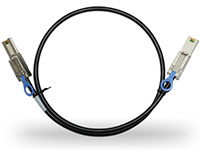
Increase the storage capacity of your CyberStore WSS storage appliance by daisy-chaining additional CyberStore JBOD units, delivering virtually unlimited storage.

All Broadberry CyberStore WSS appliances have built-in iPMI functionality, enabling complete control and management of your server through IP.
All components in the Broadberry CyberStore WSS range are sourced from leading manufacturers who take reliability as seriously as we do.

Expand your storage pools online as and when you need to with the CyberStore WSS' built in Thin Provisioning feature.

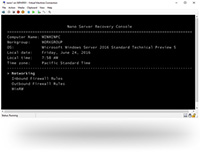
Nano Server will have a 93% smaller VHD size, 92% fewer critical bulletins and 80% fewer required reboots.
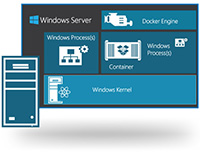
The CyberStore WSS range will provide native virtualization capabilities with two kinds of native containers, Hyper-V and Windows Server.
Enables shielded virtual machines and protects the data on them from unauthorized access - even from Hyper-V administrators.

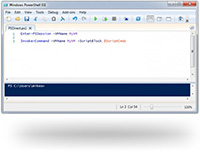
PowerShell Direct enables you to run PowerShell commands in the guest OS of a VM without needing to go through the network layers.
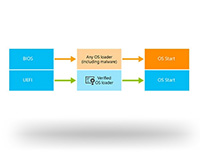
The CyberStore WSS now bosts the ability to enable secure boot for VMs with Linux guest operating systems.
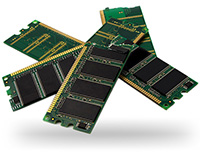
The CyberStore WSS range can add and remove virtual memory and virtual network adapters while the virtual machine is running
Windows Storage Server Work Folders works very similar to Dropbox. Install this role on your CyberStore WSS and get a fully functional secure file replication service.
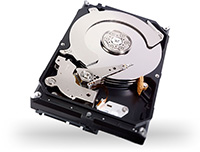
If you've ever had a disk fail in a RAID array you'll know the rebuild time can take ages, especially with large disks. Rebuild time is now greatly reduced.
The CyberStore WSS range can be configured with up to 16 network adaptors for impressive network performance and availability.
Extensive TestingBefore leaving our build and configuration facility, all of our server and storage solutions undergo an extensive 48 hour testing procedure. This, along with the high quality industry leading components ensures all of our systems meet the strictest quality guidelines.
Customization ServiceOur main objective is to offer great value, high quality server and storage solutions, we understand that every company has different requirements and as such are able to offer a complete customization service to provide server and storage solutions that meet your individual needs.
We have established ourselves as one of the biggest storage providers in the US, and since 1989 been trusted as the preferred supplier of server and storage solutions to some of the world's biggest brands, including: